

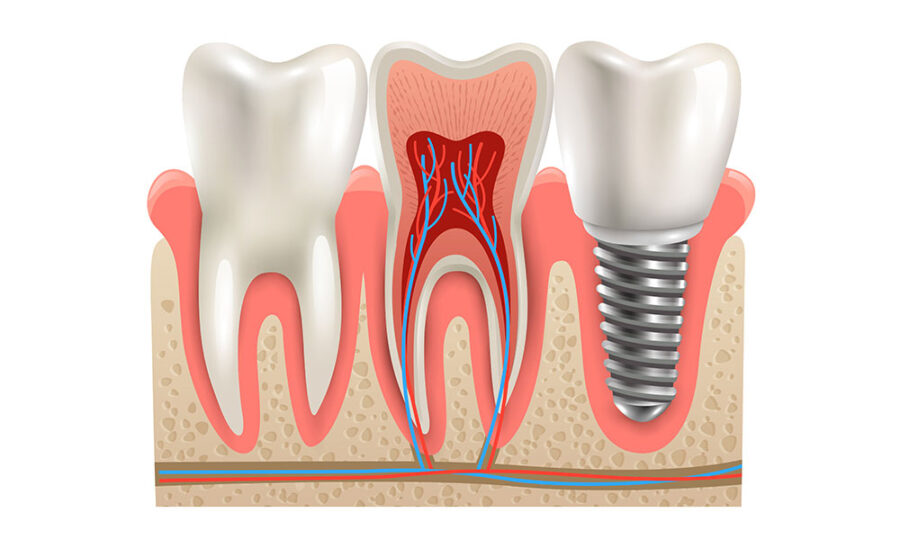
- What “graftless” really means
- How much bone is needed for dental implants? What your dentist checks
- Graftless options dentists may discuss
- When grafting is still the better option
- Costs and timelines in Sydney
- Frequently Asked Questions:
- 1) Do I always need a bone graft before dental implants?
- 2) Can short implants last as long as regular implants?
- 3) Is “all-on-four” a way to avoid bone grafting?
- 4) What scan is used to check bone for implants?
- 5) Who is not a good candidate for graftless implants?
Being told you need a bone graft can feel like the goalposts have moved. The good news is that, in some cases, dental implants without bone grafting are possible. It depends on how much bone remains, where the missing tooth sits, and how the final tooth will handle chewing forces. A careful assessment matters more than a blanket promise of “no grafts”.
What “graftless” really means
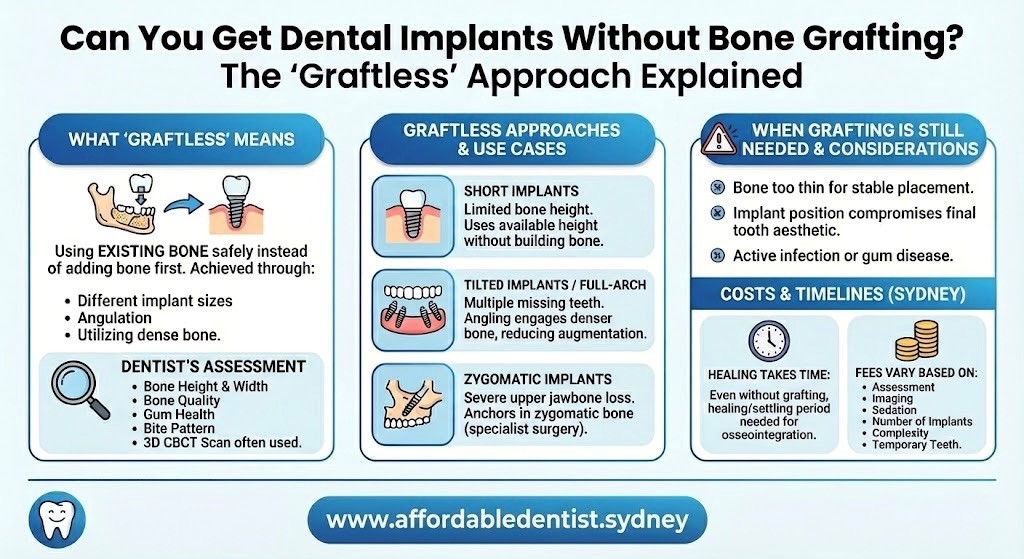
A graftless plan aims to place implants safely using existing bone rather than adding bone first. Dentists may do that by choosing a different implant size, changing implant angulation, or using a naturally dense anchorage site.
How much bone is needed for dental implants? What your dentist checks
Your dentist looks at bone height and width, bone quality, gum health, and bite pattern. In the upper jaw, the maxillary sinus often limits height. In the lower jaw, nerve canals set boundaries.
When standard X-rays cannot answer key questions, 3D imaging may be recommended. A CBCT scan for dental implant planning is commonly used for diagnosis and surgical planning.
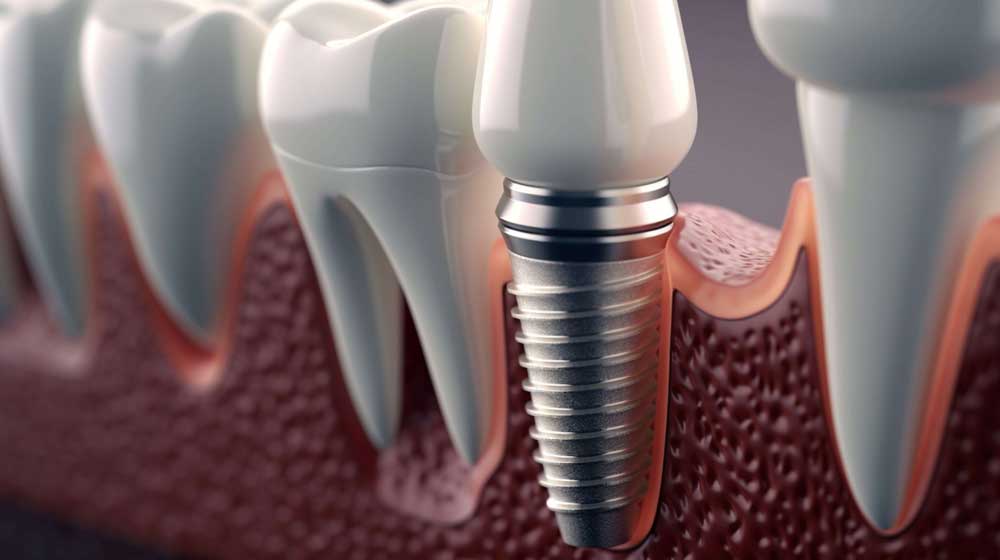
Graftless options dentists may discuss
Different approaches suit different problems.
| Approach | Typical use | Why it may avoid grafting |
| Short implants | Limited bone height | Uses available height without building bone first |
| Tilted implants / full-arch plans | Multiple missing teeth | Angling can engage denser bone and reduce augmentation |
| Zygomatic implants | Severe upper jawbone loss | Anchors in the zygomatic bone instead of rebuilt jawbone |
- Short implants: Survival rates for short implants are close to those of longer implants placed with augmentation in selected cases. The restoration still needs to control load, and some cases benefit from splinting implants together.
- Tilted implants and “all-on-four” style treatment: Angled implants can reduce the need for grafting, particularly for full-arch rehabilitation, with high reported survival in many studies. Long-term cleaning access and maintenance plans matter.
- Zygomatic implants: For very resorbed upper jaws, zygomatic implants help avoid extensive graft procedures. This is specialist surgery, so experience and follow-up should be discussed in detail.
When grafting is still the better option
Dentists recommend grafting when the remaining bone is too thin for stable placement, when the implant position would compromise the final tooth, or when infection and gum disease make the site unpredictable. In those situations, grafting can support a cleaner, stronger implant position.
Also Read: How Long Do Dental Implants Really Last? A Complete Guide
Costs and timelines in Sydney
Fees vary because implant treatment includes assessment, imaging, surgery, and a custom restoration. Costs also shift with sedation, the number of implants, temporary teeth, and whether complex surgery is needed. Ask what is included in writing.
Healing still takes time even without grafting. Some full-arch cases may allow earlier loading when dental implants are splinted, but many single-tooth cases need a settling period before the final crown. Your dentist should explain the expected visit schedule and what could slow healing, such as smoking.
Frequently Asked Questions:
1) Do I always need a bone graft before dental implants?
No. Some people have enough bone for standard implants, and others may suit options such as short or angled implants. Your dentist recommends grafting when there is not enough bone to stabilise an implant safely or when the implant would end up in a poor position for the final crown. The decision should be based on measurements and risk.
2) Can short implants last as long as regular implants?
In carefully selected cases, research comparing short implants with longer implants placed alongside augmentation has shown similar survival over reported follow-up periods. Success still depends on good surgical technique, bite management, and keeping gums healthy with good home care and regular reviews.
3) Is “all-on-four” a way to avoid bone grafting?
Often, yes. Tilted implants can engage stronger bone and reduce the need for augmentation, especially when replacing a full arch. All-on-four also has high implant survival, but a clear plan for cleaning and maintenance matters.
4) What scan is used to check bone for implants?
Your dentist may start with standard dental X-rays. If they need precise information about bone shape, nerve position, or the sinus, they may recommend CBCT imaging. CBCT use should be justified by clinical need and performed with appropriate referral criteria and dose optimisation.
5) Who is not a good candidate for graftless implants?
People with active gum disease, uncontrolled conditions that affect healing, heavy smoking, or very limited bone may be better served by grafting or another treatment. Some cases need grafting to place the implant in a position that supports a functional, cleanable tooth. An in-person assessment is the only reliable way to decide.
If you are weighing your options in Sydney, a consultation with a dentist that includes proper imaging and a written treatment plan can save money and stress later.
Tags: dental implant, dental implants