

The box costs less than lunch. Two weeks of strips, a brighter smile, no appointment and no waiting room. That promise sits on pharmacy shelves across Sydney, and it sells because it works often enough to keep selling. What the box leaves out is the trade-off: how white you can really get, how your teeth will feel along the way, and whether the gel is doing something your enamel will regret later.
That is the comparison worth making. Strips against the dentist’s chair, measured properly, on the three things that actually matter: how safe each option is, how much it hurts, and the results you walk away with.
The same chemistry, different doses
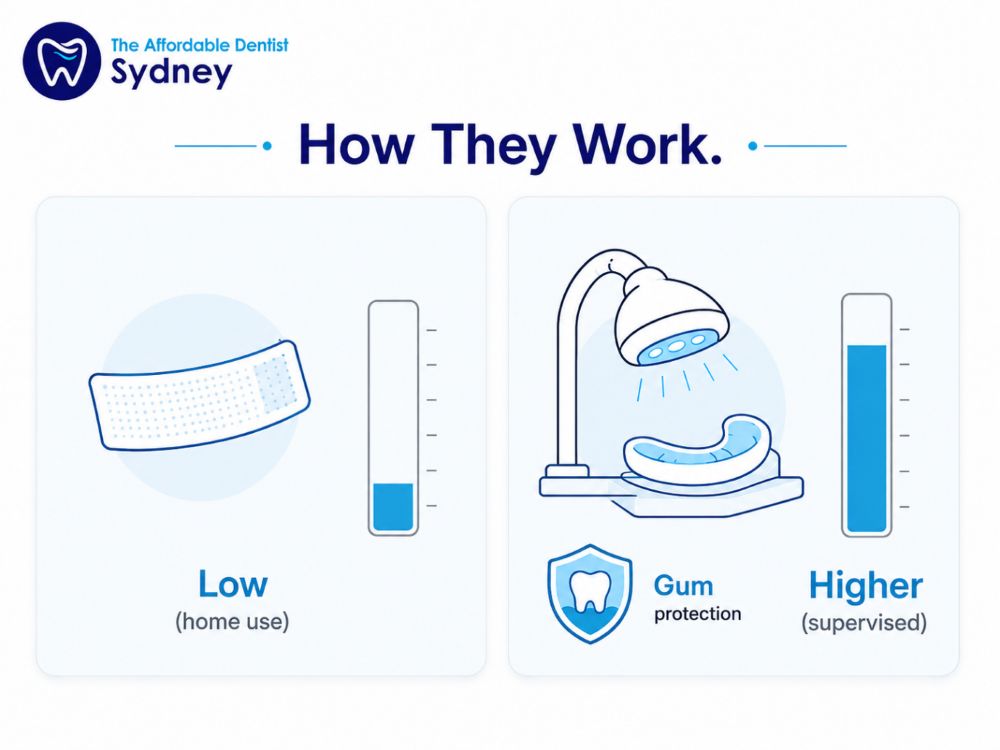
Both methods lean on the same active ingredient. Peroxide, whether hydrogen or carbamide, breaks apart the darkly coloured molecules bonded to your enamel, which is exactly how at-home strips and in-chair gels both work. The difference is dose and control.
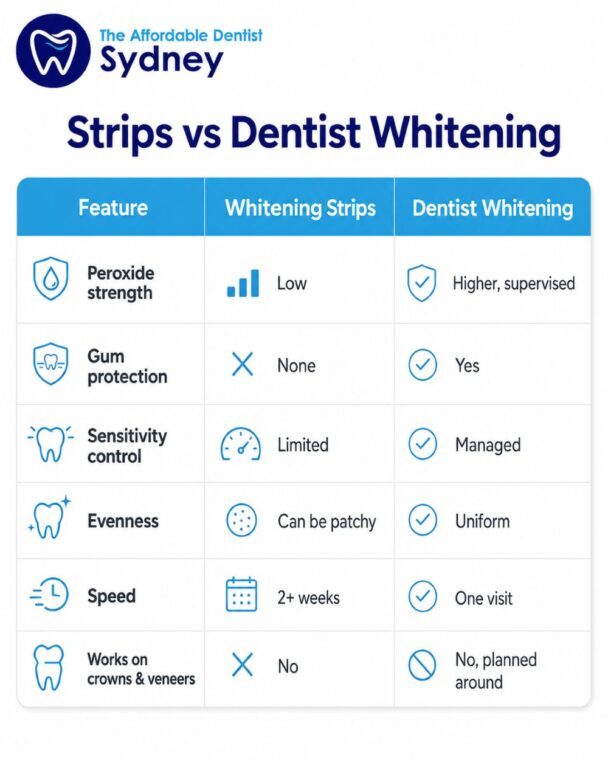
Over-the-counter strips carry a low concentration, the kind considered safe for home use without a dentist watching. A dentist works with a stronger gel, paints it on tooth by tooth, and lays a barrier over your gums first to keep it off the soft tissue. Higher concentration, faster change. Lower concentration, slower and gentler. That single variable explains most of what follows.
Are whitening strips safe?
Mostly, yes, as long as you follow the instructions. Used as directed, strips are safe and effective, and the ones carrying the ADA Seal of Acceptance have been independently tested for both safety and whitening performance.
The trouble starts with enthusiasm. Leave the strips on longer than the label says, or reach for them every week chasing one more shade, and the peroxide that lifts your stains starts working against you. Overuse can damage enamel and gums and leave teeth looking translucent at the edges, revealing the yellower layer underneath. Strips also can’t tell a stain from a cavity. Lay them over an untreated problem and you hide it rather than fix it.
And nobody is checking your mouth before you start. That is why the ADA recommends a dental exam before any whitening, so a professional can spot the decay, gum disease or worn enamel a strip will happily bleach straight over.
The sensitivity nobody warns you about
Peroxide reaches the dentin beneath your enamel, and the nerve answers back. That is the cold-zinging twinge whitening users know well. It is the most common complaint with any peroxide method, usually mild and short-lived, fading within days of stopping.
Strips carry a particular handicap here. They can’t stop the gel from sliding onto your gums, which is where most of the irritation and tenderness comes from. A dentist seals the gums off first and can build desensitising agents into the treatment, so the same active ingredient lands with far less collateral. If you already deal with teeth whitening sensitivity, that supervision is the gap between a manageable session and a fortnight of wincing at your morning coffee.
Results: speed, evenness and the restoration trap
Strips deliver. Modestly, and on their own slow timetable. Expect a few shades over a couple of weeks of daily wear, and the best results on yellow stains from coffee, tea, wine and tobacco. Heavy or grey discolouration tends to shrug them off.
Evenness is the next catch. A flat strip never quite hugs a crooked tooth or the gaps between teeth, so the colour can land patchy, bright in the middle and untouched in the corners. In the chair, the gel reaches everywhere it should and the shade reads uniform. Professional whitening also uses higher concentrations to hit the target shade faster, in fewer applications.
Then comes the part that catches people out. Whitening only works on natural enamel. Crowns, veneers and fillings do not lighten at all, so a crown on a front tooth can leave you with a brighter smile wrapped around one stubborn, mismatched square. A dentist plans around your existing dental work before a single drop of gel goes on. A strip has no idea it is there.
When to skip the strips and book a check first
Some mouths should see a dentist before anything touches them. Untreated decay, gum disease, cracked teeth, heavy existing sensitivity, restorations on visible teeth, or pregnancy all push whitening down the priority list until a professional has looked first. In each case the strip isn’t merely less effective, it is the wrong opening move. A quick dental check-up sorts out what is really happening before you spend a fortnight bleaching over it. If you want the deeper background on options and aftercare, this definitive guide to teeth whitening covers the rest.
Frequently Asked Questions
Are whitening strips safe to use at home?
For most healthy mouths, yes, used strictly as directed and ideally carrying the ADA Seal of Acceptance. The real risk comes from overuse and from whitening over a problem you don’t know is there, which is why a quick check-up first is worth the time.
Why do my teeth feel sensitive after whitening?
Peroxide passes through the enamel and irritates the nerve underneath. It is common and usually temporary. Professional teeth whitening manages it with gum barriers and desensitising agents, and switching to a sensitive-teeth toothpaste for a week or two before and after helps.
Will whitening work on crowns or veneers?
No. Whitening only lifts colour from natural enamel. Crowns, veneers and fillings stay exactly the shade they already are, so any whitening needs to be planned around existing dental work rather than applied over it.
Brighten up the supervised way
If you are weighing up teeth whitening in Sydney, the safest version is the one a dentist runs. At Affordable Dentist Sydney, our professional teeth whitening in Sydney is a single 45-minute session with a free consultation first, so your enamel, gums and any existing dental work are checked before we begin, all for a flat $440 with no surprise bills. Book online or call 1300 320 881 and walk out brighter the same day.
Tags: Teeth Whitening, teeth whitening Sydney, teeth whitening treatment