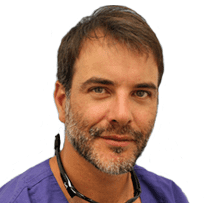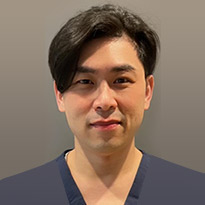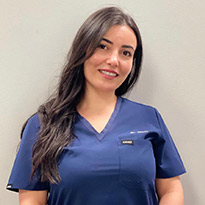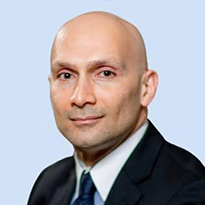
Replacing a missing tooth is an investment in your oral health, confidence, and quality of life. At Affordable Dentist Sydney, we offer high-quality dental implants from $1,500, backed by transparent pricing, experienced clinicians, and personalised treatment planning.
With 20+ years of oral surgery experience and over 4,500 dental implants placed, our team has helped thousands of patients restore missing teeth with durable, natural-looking results.
Dental implants start from $1,500 for a single implant fixture. A complete single-tooth implant (fixture, abutment, and crown) typically ranges from $3,000 to $6,500 once every stage is included. The final cost depends on the number of teeth being replaced, jawbone condition, whether extraction or bone grafting is needed, and the restoration type. Full-arch and All-on-4 style treatment costs considerably more, since it involves several implants and a full prosthesis per arch.
At a glance
Porcelain metal and Zirconia all made in recognised Australian Labs

Cost varies because every case is different. Key factors include
A single tooth needs one implant and crown; multiple gaps may need several implants or a bridge; a full arch may need full-arch treatment.
Sufficient bone allows direct placement; reduced bone may need grafting first.
If a damaged tooth needs removing first, this adds a stage (and sometimes a healing period) before implant placement.
A single crown, implant-supported bridge, or full-arch prosthesis all carry different costs and complexity.
The titanium fixture, abutment, and crown, plus diagnostic imaging, all factor into the final quote.
We assess these individually at consultation and provide a transparent cost breakdown before treatment begins, rather than a single advertised price with no detail behind it.
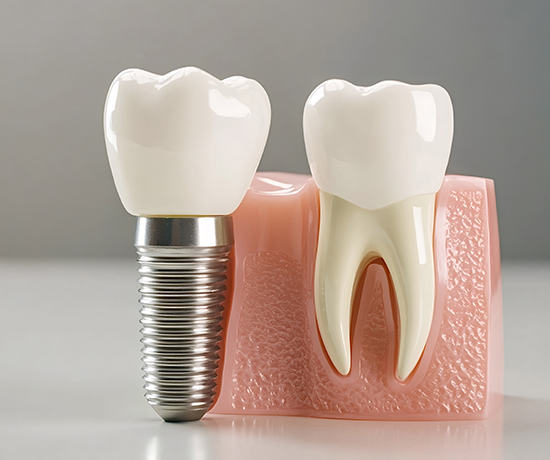
A dental implant replaces both the visible tooth and its root. A titanium implant fixture is placed into the jawbone, where it fuses with surrounding bone through a process called osseointegration. Once healed, an abutment connects the fixture to a custom-made dental crown that matches your surrounding teeth. Together these three parts form a complete, natural-looking, implant-supported tooth replacement.
Because implants restore the tooth root, they help preserve jawbone volume and support normal chewing, in a way removable dentures and bridges cannot.

| Feature | Dental Implants | Dental Bridge | Dentures |
|---|---|---|---|
| Replaces tooth root | Yes | No | No |
| Fixed in place | Yes | Yes | Usually removable |
| Helps preserve jawbone | Yes | No | No |
| Affects neighbouring teeth | Usually no | Yes, reshaped for support | No |
| Long-term outlook | Excellent with care | Good | May need periodic adjustment |
| Feature | Single Implant | All-on-4 Style Full Arch |
|---|---|---|
| Best for | One missing tooth | Most/all teeth missing in an arch |
| Implants needed | One | Typically four or more |
| Cost | From $1,500 (fixture) | Considerably higher, per arch |
| Complexity | Generally straightforward | More involved planning and surgery |
| Feature | Immediate Placement | Delayed Placement |
|---|---|---|
| Timing | Same day as extraction | After the extraction site heals (months) |
| Suitability | Needs good bone quality, no infection | Often used for infection, complex extractions, or low bone volume |
| Evidence | Prospective studies report survival in the mid-to-high 90s in suitable cases | Long-established approach with strong long-term track record |

Suitability depends on your individual oral and general health, not a one-size-fits-all rule:
A comprehensive assessment, including imaging of your jawbone, determines whether implants, a bridge, or a denture is the most appropriate option for you.
Leaving a gap untreated tends to set off a chain of changes rather than staying static. Without a tooth root to stimulate it, the jawbone begins to resorb quickly: research on post-extraction healing found horizontal bone loss of 29 to 63 percent and vertical bone loss of 11 to 22 percent within six months of extraction. Neighbouring teeth can drift into the gap, your bite (occlusion) can gradually shift, and chewing or speech may be affected depending on which tooth is missing. Over time, significant bone loss can also change facial structure. If teeth have already drifted or become crowded as a result, invisible braces can sometimes help realign them alongside implant treatment. Waiting years before treating a gap can mean bone grafting becomes necessary if you later choose an implant, so it’s worth discussing your options even if the gap isn’t bothering you yet.
A long-term cohort study following over 10,000 implants for up to 22 years reported implant-level survival of 98.9 percent at 3 years, 96.8 percent at 10 years, and 94.0 percent at 15 years, while a separate meta-analysis of contemporary implant systems found 10-year survival of 96.4 percent. These are population-level figures, not a guarantee for any individual, and your personal outcome depends on your health, bone quality, and aftercare.
If you’d like your new crown to match a brighter smile, it’s worth discussing teeth whitening before your crown is made, since the crown shade is matched to your natural teeth at that point in time and won’t whiten later.

“Implants are only for older patients.” Suitability depends on jaw development and health, not age. There’s no upper age limit for otherwise healthy patients.
“They look obviously fake.” Custom crowns are matched to your surrounding teeth in colour, shape, and translucency.
“Getting one is extremely painful.” Placement is done under appropriate anaesthetic; most patients find recovery more comfortable than expected.
“No maintenance is needed once placed.” Implants can’t decay, but the surrounding gum and bone (peri-implant tissue) still need regular brushing, cleaning, and check-ups to avoid inflammation.
“Bone loss rules out implants.” Bone grafting can often rebuild enough volume; a proper assessment determines suitability, not assumptions.
“They never fail once placed.” Survival rates are high (90 to 96 percent at 10 years), but smoking, poor hygiene, and uncontrolled health conditions increase the risk of complications like peri-implantitis.

Examination, imaging, medical history, and treatment goals.


Number of implants, restoration type, timeline, and transparent cost breakdown.

Extraction (including wisdom teeth removal where relevant), gum treatment, or bone grafting if needed.

Extraction (including wisdom teeth removal where relevant), gum treatment, or bone grafting if needed.

The bone fuses with the implant, typically over several months.
Connecting the implant to the final restoration.
Mild swelling, bruising, and tenderness are normal for the first few days after surgery. Your dentist will provide aftercare guidance and schedule reviews to monitor healing, gum condition, and implant stability throughout recovery, then ongoing check-ups and professional cleans to protect your investment long-term.
Honestly, the only real way to know is to come in and let us have a proper look. We’ll check your oral health, gums, and jawbone, go through your medical history, and talk about what you’re hoping to achieve. If implants aren’t the right fit straight away, we’ll walk you through what else might work, or what needs to happen first.
It depends on your situation. Some patients are in and out in just a handful of visits, while others need a few extra appointments along the way, for a tooth extraction or bone grafting, for example. We’ll map out the whole timeline for you at your consultation so there are no surprises.
Most people are back at their desk within a day or two. If your job is more physical, like lifting or manual labour, we’ll usually suggest taking a bit longer to let things settle and heal properly.
Yes, we do. We know implant treatment is a real financial commitment, so we offer flexible payment options to help spread the cost. We’re happy to talk through what could work for your budget during your visit.
There’s street parking and a couple of public car parks close by, and we’re also an easy walk from public transport if that suits you better. If you’re not sure, just ask our reception team before you come in and they’ll point you in the right direction.
We’re located in Sydney CBD, and we regularly see patients travelling in from Parramatta and Bondi as well. If you’re not sure how easy it’ll be to get to us, just give us a call and we can talk through the best way to get here
If you’ve got recent X-rays, a referral letter, or a list of any medications you’re on, bring those along. Records from previous dental work elsewhere are useful too, if you have them. Not sure what counts? Just ask when you book and we’ll let you know.
We’ll have a chat about what’s brought you in, do a full examination, and take any imaging we need to get a clear picture of your jawbone. From there, we’ll talk through your options, answer whatever questions you’ve got, and put together a treatment plan with clear, upfront pricing before anything else happens.
Pretty much the same way you’d look after your natural teeth: brush twice a day, clean between your teeth, and keep up with your regular check-ups. We’ll also give you some pointers specific to your own treatment so you know exactly what to do.
Our number one goal is to make sure each and every one of our patients receives the highest quality of care at Affordable Prices.
Every smile is different, which is why every implant treatment begins with a comprehensive consultation.
During your appointment, we’ll:
With 20+ years of oral surgery experience, over 4,500 dental implants placed, and a commitment to affordable, high-quality care, we’re here to help you restore your smile with confidence.
Book your consultation today and discover whether dental implants are the right solution for you, or browse our full range of dental services if you’d like to explore other treatment options first.
Any surgical or invasive procedure carries risks. Before proceeding, you should seek a second opinion from an appropriately qualified health practitioner.
Here at The Affordable Dentist Sydney, we set our main goals to be high-quality service at affordable fees to reach as many patients as possible in need of dental health.
We quickly identified a real problem in Australia: the high cost of dentistry means patients avoid having vital dental work. So we set out to find a way to provide a low-cost, high-quality dental service.