
- What “full mouth” treatment usually means
- Understanding the steps
- All-on-4 vs All-on-6: what the labels actually change
- Timeframes: why it’s rarely “done next week”
- Recovery and day-to-day life during healing
- Results: what “good” looks like
- Frequently Asked Questions:
- 1. What are full mouth dental implants and how do they work?
- 2. How long does the full mouth dental implant process take from start to finish?
- 3. What are the steps in a full mouth dental implant procedure?
- 4. How painful are full mouth dental implants, and how long does discomfort last?
- 5. Will I have temporary teeth while my implants heal?
Living with failing or missing teeth can make ordinary things tiring: choosing softer foods, covering your mouth when you laugh, or avoiding photos. Full Mouth Dental Implants can restore a stable bite, but the process works best when you know the steps and the waiting periods that come with healing.
What “full mouth” treatment usually means
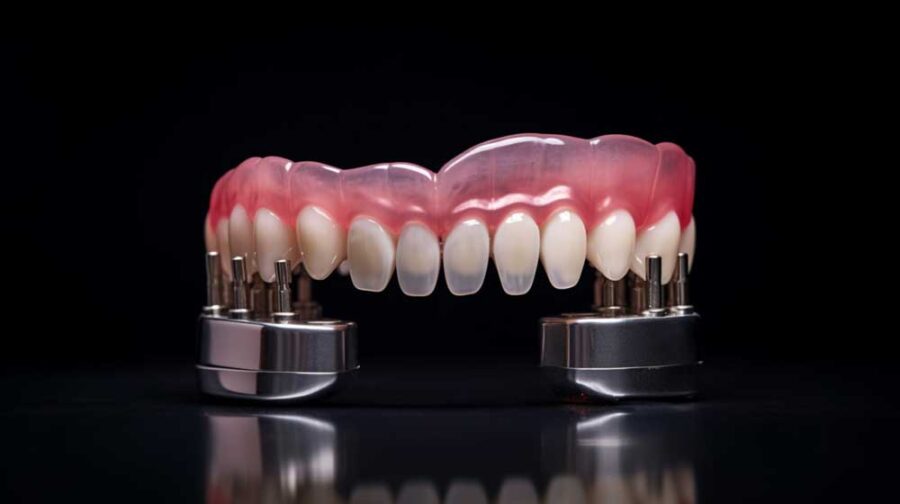
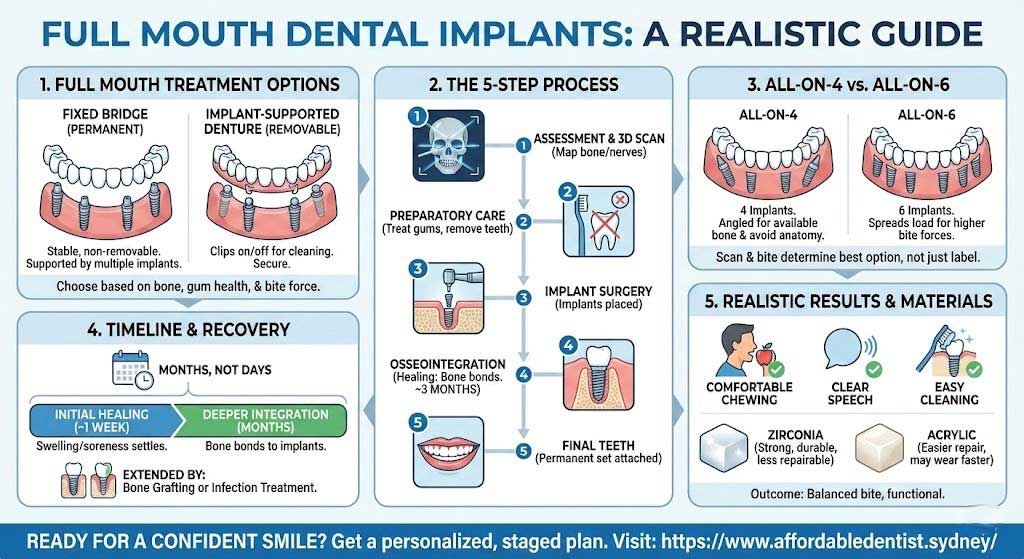
Most “full mouth” plans replace one or both arches (upper, lower, or both). Many people choose a fixed bridge supported by several implants, often described as full arch dental implants. Others prefer an implant-supported denture that clips on and off for cleaning.
A clinician helps you choose based on your bone, gum health, bite forces, and whether you want something removable. The goal is the same: secure teeth that feel steady when you speak and chew.
Understanding the steps
A straightforward plan usually follows a familiar order:
- Assessment and 3D scan to check bone levels and map nerves and sinuses.
- Preparatory care, which may include treating gum disease, removing unsalvageable teeth, or planning a temporary set.
- Implant surgery, where implants are placed into the jaw.
- Healing (osseointegration), when bone grows around the implants. Healthdirect notes this bonding can take about three months for many patients.
- Final teeth, once the implants are ready to support long-term chewing.
All-on-4 vs All-on-6: what the labels actually change
These terms describe how many implants support a full arch and how they’re positioned.
- With All-on-4 dental implants, two implants usually sit towards the front and two are angled towards the back to use available bone and avoid key anatomy.
- With All-on-6 dental implants, the clinician uses six implants to spread load across a larger area.
Some mouths benefit from that extra support, especially if bite forces are high or the final bridge design needs it. Your scan and bite matter more than the marketing name.

Timeframes: why it’s rarely “done next week”
People often ask for a single end date, but the schedule depends on biology. The key waiting period is osseointegration. Many guides describe a healing window of months before the final teeth, especially if the case is complex.
Two common add-ons can extend the schedule:
- If bone is thin, you may need bone grafting for dental implants, which adds extra healing time before implants can be placed or safely loaded.
- If infection is present around failing teeth, your dentist may stage extractions first to let tissues settle.
When people ask about the full mouth implant timeline, a realistic answer is “months, not days”, with clearer dates once scans and planning are complete.
Also Read: Bone Grafting 101: What It Is and Why It’s Necessary for Dental Implants
Recovery and day-to-day life during healing
The first week is usually about managing swelling and soreness, then easing back into routine. Some common short-term effects after implant surgery include swelling, bruising, pain at the site, and minor bleeding, and advises contacting your clinician if symptoms worsen in the days after surgery.
For many people, the sharper discomfort settles within about a week; Discomfort is often managed with regular painkillers and should only last up to a week.
That early phase is part of your overall full mouth implant recovery time, but deeper healing continues for months while the implants integrate.
Results: what “good” looks like
A good outcome is practical: you can chew comfortably, speak clearly, and clean around the implants without struggling. It also means the bite feels balanced, not “high” on one side. Long-term results rely on hygiene and regular reviews. Follow your dental professional’s instructions after the procedure.
Material choice affects feel and maintenance too. Many clinics discuss Zirconia vs acrylic implant bridge options because they differ in strength, repairability, and how they wear over time. Your dentist should explain what suits your bite, not just what looks good on day one.
If you’re searching for full mouth dental implants, look for a clinic like The Affordable Dentist Sydney that gives a written staged plan (including temporaries, reviews, and likely timeframes) so you can plan leave, budgets, and support at home.
Frequently Asked Questions:
1. What are full mouth dental implants and how do they work?
They replace most or all teeth using implants placed into the jawbone. The implants act as anchors for a fixed bridge or a denture that clips on. Over time, bone bonds to the implant surface (osseointegration), creating stability for chewing.
2. How long does the full mouth dental implant process take from start to finish?
Many cases take several months. The main reason is healing: after surgery, bone needs time to bond to the implants. It can take about three months for bone to grow around an implant, and some people need longer depending on complexity and any preparatory procedures.
3. What are the steps in a full mouth dental implant procedure?
Most plans include assessment and 3D imaging, managing gum disease or infection, extractions if needed, implant placement, a healing phase, then the final teeth. Mayo Clinic notes implant treatment can occur in stages, and you may need healing time after each stage.
4. How painful are full mouth dental implants, and how long does discomfort last?
Soreness, swelling, bruising, and minor bleeding are common after surgery. These are typical short-term effects. Any discomfort is usually treated with regular painkillers and should only last up to a week. If pain or swelling worsens after a few days, contact your clinic.
5. Will I have temporary teeth while my implants heal?
Often, yes. Some patients receive a fixed provisional bridge soon after surgery when the implants are stable enough, while others use a removable temporary to protect healing sites. The All-on-4 concept, for example, can include a provisional “teeth in a day” in selected cases. Your dentist will decide what’s safe based on stability, bite forces, and your health history.